 Free quote
Free quote
Free quote
Property Beautification
Selective clearing, canopy work and invasive removal around Huntsville and Conroe that opens a property up without stripping it. Call (936) 648-2843.
Most properties around here do not need to be cleared. They need the right things taken out and the right things left standing. There is usually a good property already underneath — mature hardwoods worth showing off, a view that got closed in, natives holding ground where nobody planted them — buried under twenty years of briars, volunteer growth and privet.
Property beautification is the work of finding that and bringing it back out.
Call (936) 648-2843 and we will walk the place with you.
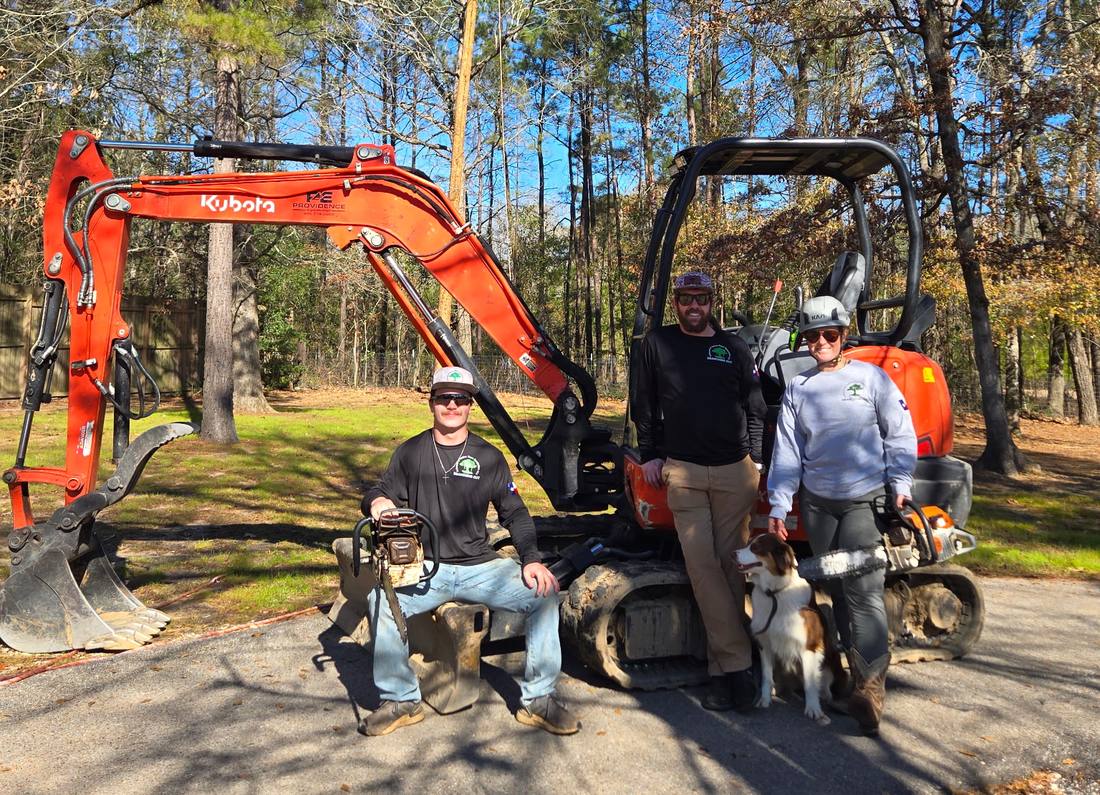
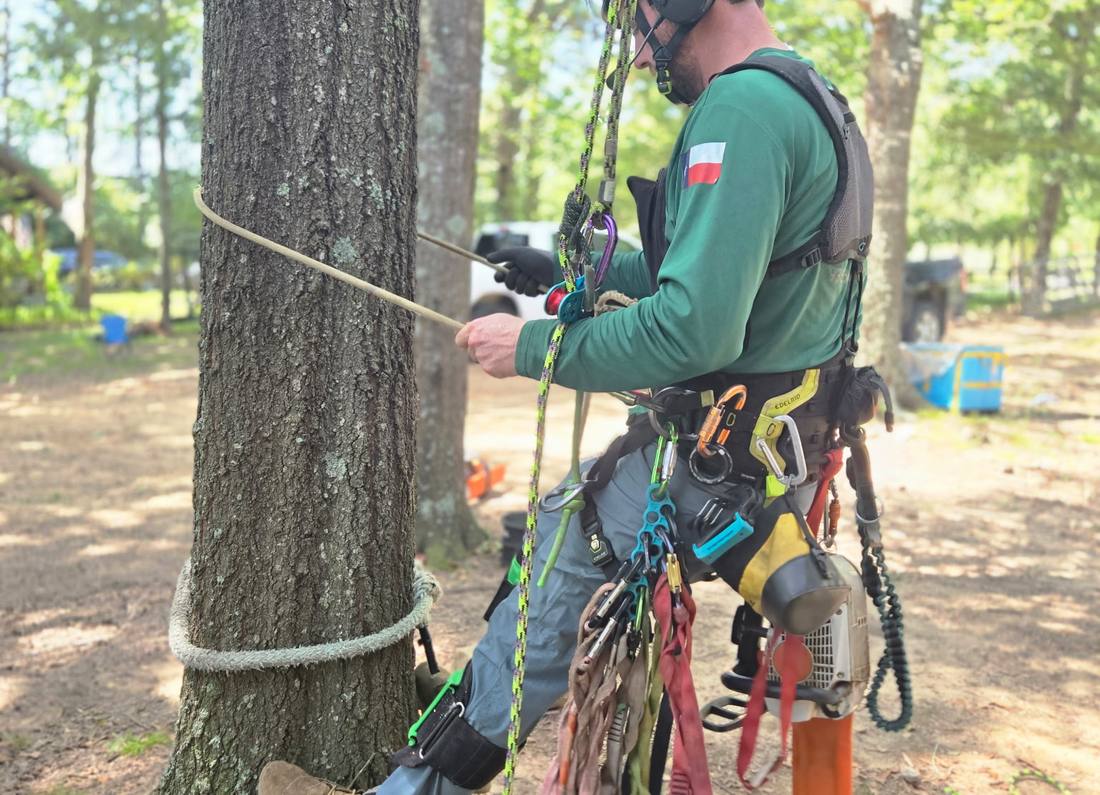
Tree canopy improvement. Deadwood out, selective pruning for structure and shape, canopy raised where it is sitting on a roof or dragging across a driveway, and clearance opened where limbs are crowding a building or blocking a view. A mature tree that has been limbed up correctly stops reading as an obstacle and starts reading as the best feature on the lot.
Overgrown brush and understory. Briars, vines, volunteer saplings and the congested tangle that fills in wherever light reaches the ground. This is the layer that makes a property feel closed in and unwalkable, and it is usually the single biggest visual change.
Invasive plant removal. Chinese tallow, privet, bamboo and invasive vines taken out while the natives around them are protected rather than run over. There is a whole page on that work if you want the detail on how it is done and why cutting alone does not hold.
Shrub and small tree removal where plants are dead, badly placed, crowded against each other, or simply working against the look of everything around them — including yaupon removal around larger trees, where it has thickened up and is closing in on the trunk.
Fence lines and property edges cleared back so boundaries look maintained and you can actually walk or drive them.
Native plant preservation. Identifying what is worth keeping and opening space around it — mature trees, native shrubs, grasses and wildflowers that have been quietly holding on under the mess.
Brown hardwood mulch and bed cleanup around trees and landscape areas, which is what makes finished work read as finished.
Debris and general cleanup. Limbs, brush, cut vegetation and accumulated organic debris hauled off, plus selective trash removal where it has piled up.
Selective land clearing when an area genuinely needs opening up, without completely stripping the property. That includes yaupon taken out from the roots and tubers — not just cut down where it comes back year after year.
Drainage and erosion improvements where water is the reason an area looks bad or will not hold plants.
Plant health assessment as we go, so nothing gets made prettier this year at the cost of the trees being worse in five.
A landscape crew is generally working toward one look: everything trimmed, edged and uniform, the way a new subdivision looks. That is a legitimate service and it is not this one.
We come at a property from arboriculture and native plants. The question is not "how do we make this tidy," it is "what is worth keeping here, and what is standing in its way." Those produce very different results on the same acre. The manicured approach takes out the understory wholesale because it is untidy. The approach here takes out the tallow and the briars and leaves the beautyberry, the young oaks and the wildflowers, because those are the parts that will look better every year instead of needing to be maintained forever.
The results tend to be a property that looks intentional and cared for while still looking like East Texas.
This matters to a lot of the people who call, so it is worth being direct about.
Clearing every bit of understory off a wooded lot removes the nesting cover, the fruit and the insect habitat that the birds on your property depend on. You end up with mowed ground under a canopy — clean, quiet, and largely empty.
The work here is planned to keep habitat intact. Thickets get thinned and shaped rather than erased, native fruiting shrubs are protected on purpose, brush piles can be left in places where they do more good than harm, and the structure birds actually use stays in the property. If you want a place that looks good and still has something living in it, say so at the walkthrough and the plan gets built around that.
Included
Typical range: Quoted per property
Reviews
I can’t say enough great things about this company! They were incredibly friendly, professional, and truly a breath of fresh air to work with. They safely removed a dead tree from my property and even went above and beyond by neatly stacking the wood for me to use as firewood this year. Their prices were very fair, and the quality of their work exceeded my expectations. The Arborist (billy) helped me identify every tree on my property. If you’re looking for a reliable, honest, educated and skilled tree service, I highly recommend Branching Out Arboreal and Native Plant Specialists — you won’t be disappointed!Victoria Tillman · 8 months ago
Branching Out did an amazing job removing a dangerously dead pine tree from our backyard. The tree was right next to power lines, a transformer pole, fences, and close to our home, so it was a very difficult removal with almost no room for error. The tree was so dead it was basically crumbling while they climbed it, but their crew handled everything safely and professionally without causing any damage at all. What made the job even more difficult was that another healthy tree had actually started growing out of the dead pine, and they were able to carefully remove the pine while saving the healthy tree as well. A few weeks later, another company working nearby actually dropped a tree into power lines and took down a transformer pole — which made us even more grateful we hired Branching Out. These guys clearly know what they’re doing. Highly recommend them for any tree removal or dangerous tree work.Kenzi Standley · 2 months ago
First I want to say Branching Out is a professional company. After talking to Billy he sent me a printed quote for the work we had viewed and discussed . He removed three trees for us. His price was far more reasonable than the three other verbal quotes I had received. Also the other companies came back with lower offers after their bids were rejected. The bids were still not as low as Branching Out. The job was done super well and we enjoyed working with his whole crew, including his associate Tyler who did the stump grinding.Judy Price · a month ago
They did an excellent job cutting down a tall dead pine that was in a tight spot—no one’s favorite thing to do! Great communication, friendly, professional, and courteous. We had a challenge finding someone to service our area, so we are grateful and would highly recommend.everyotherone12 · a year ago
I was trying to save a tree and most companies want to just cut them down. But Kat & Billy went over and beyond to help me save my tree. They had to cut off alot more of the rotton branches than expected. But at least I should be able to keep this tree for were hoping another 5 yrs so I have time to get another one planted and growing before I lose this one. It's my only shade tree. They were very reasonable in thier prices and very knowledgeable. Would definitely use them again and refer them out. Thanks guysKim Taylor · a year ago
Reviews from Google · read them all
Coverage
Questions
That is the most common worry and it is a fair one, because plenty of clearing work does exactly that. It should not.
Selective removal takes out specific things for specific reasons. On most properties the visible change is that the ground opens up and the trees stand clear — more depth, more light, longer sightlines. The canopy stays. The natives stay. What leaves is the layer that was hiding everything.
If a section genuinely does need heavy opening, you will hear that before any work starts, along with what it will look like afterwards.
Yaupon is the single most common reason a property here feels closed in. With fire kept off this landscape for decades it thickens into dense stands that crowd mature trees, block access and shade out whatever is trying to grow underneath.
It comes out from the roots and tubers — not just cut down. That distinction is the whole job. Cutting yaupon at ground level buys you about a season before it is back, thicker than before, which is exactly why so many people feel like they clear the same brush every single year and never get ahead of it. Taken out properly at the root, it is done.
Around larger trees especially, getting the yaupon out is what lets a mature hardwood actually be seen.
Some regrowth is normal and expected — this is East Texas, the seedbank is in the soil, and bare ground fills in fast. The difference is what fills it.
When the invasive material is removed properly and the natives are left holding their ground, what comes back is mostly what you want. A property that gets looked at once a year after the initial work stays ahead of it easily. A property that was cut flat and left is starting over every spring.
Per property, in writing, after walking it. Beautification work varies too much to quote off a photo or a phone call — a half-acre of privet and briar is a different job from five acres of scattered yaupon, and the price depends on access, how much material has to leave the site, and how much of the work is careful removal versus straightforward cleanup.
You get an agreed written price before anything is cut, and the site is cleared properly when the work is finished.
Get in touch
Call and talk to someone who does the work, or send the details and we'll get back to you.
Call (936) 648-2843